
DRAGONFLY JOURNAL
Organisers: Plan a Group Holiday in Andalucía Without Splitting the Party
Organisers: Plan a Group Holiday in Andalucía Without Splitting the Party

The first step is to fix your group brief, dates, headcount and purpose, then book a single exclusive-use property so everyone stays together rather than scattering across hotels or apartments. From there, four priorities decide whether the trip runs smoothly: getting arrival logistics right, checking the property properly, building a simple daily rhythm, and sorting food and communication early. Get those in order and the rest of the planning falls into place.
TL;DR:
- Book an exclusive property with enough bedrooms, indoor and outdoor communal spaces, and confirm it is private to avoid sharing grounds with others.
- Coordinate flights, transfers, and car rentals early, verifying driver licenses and building a detailed transport itinerary with arrival times and responsibilities.
- Plan a simple, flexible daily rhythm with one main activity, optional excursions, and unstructured time to suit different mobility and activity levels.
- Manage group meals through self-catering, hired chefs, or venue-hosted options, and gather dietary needs and allergies in advance to streamline catering.
- Agree on fair cost-sharing methods and final payment deadlines, and prepare a travel and safety plan covering insurance, documents, emergency contacts, and local customs.
Table of Contents
- Define the group brief: goals, guest profile and constraints
- Choose the right property and what to check before you commit
- Plan transport and arrival logistics: flights, transfers and car hire
- Design a simple retreat rhythm and pick activities that suit the group
- Food and catering: practical ways to feed a group and manage diets
- Practical admin and safety: documents, insurance and simple risk steps
- Budget planning and cost-sharing methods for the group
- Local customs and cultural considerations in Andalucia
- Weather and best travel seasons for Andalucia
- Group decision-making processes and conflict resolution strategies during the trip
- Why an organiser might choose The Dragonfly Retreat
- Sources
- FAQ
Define the group brief: goals, guest profile and constraints
Before you contact any venue, write down exactly who is coming and why. A brief that only says “a villa for ten adults in June” leaves too much guesswork, and vague enquiries get vague answers.
Gather these details first:
- Exact dates and flexibility (fixed, or a window of a few days either way)
- Confirmed headcount, plus ages, mobility needs and any under 18s
- Sleeping arrangements: couples sharing, singles, twin rooms, accessibility needs
- The trip’s purpose and mood, whether that is a milestone celebration, a creative retreat or simply a family reunion
- Budget range per person, including whether meals and activities are shared costs
Each of these shapes what you book. A group with grandparents and toddlers needs step-free access and a shaded garden; a group of friends celebrating a birthday might prioritise a big communal terrace and pool for evenings together. Purpose also matters: a photography or cookery-themed retreat needs different indoor space than a straightforward family holiday.
Pro Tip: Turn your brief into a simple spreadsheet with one row per guest, columns for arrival date, dietary needs, room preference and mobility notes, and share it with the venue before you book.
Choose the right property and what to check before you commit
The whole point of a group holiday in Andalucia is staying together; the property has to work as one shared home, not a collection of separate rooms. Look for enough bedrooms to house everyone comfortably, more than one indoor communal area, and outdoor space, a garden, terrace and pool, generous enough for the whole group to use at once.
Before committing, ask the host:
- Is the property exclusive to our group, or could other guests share the grounds?
- Is there a minimum stay, and what is the cancellation policy?
- Who handles cleaning during the stay, and on what schedule?
- Are there any noise, party or curfew restrictions we should know about?
- Is there step-free access if anyone in the group needs it?
A private retreat venue in the Andalusian countryside near Coín, Málaga, often suits this brief. Such venues typically offer private bedrooms across different room types, indoor and outdoor communal spaces, a pool and gardens, and operate differently from conventional hotels. Groups can often add hosted experiences such as Mediterranean cooking, wine tasting, art and photography sessions, catering to families, friends and creative or corporate groups wanting more than just shared accommodation.
Pro Tip: Ask for photographs of every bedroom and communal space, not just the marketing shots, so you can allocate rooms fairly before anyone arrives.
Plan transport and arrival logistics: flights, transfers and car hire
Transport coordination is usually the part that causes the most last-minute stress, mainly because everyone books flights separately and nobody compares notes until the week before. Collect arrival times, flight numbers and luggage counts from every guest as soon as bookings are confirmed, and keep it all on one shared sheet.
- Decide between a single organised transfer, staggered private transfers, or self-drive hire cars, weighing cost against convenience for your group size.
- If hiring cars, check that UK photocard driving licences are valid in Spain, though provisional licences are not accepted.
- Confirm that every named driver appears on the rental contract, since Spain’s official driving guidance notes that additional drivers must be added formally and a credit card is usually required at pickup.
- Request child seats in advance if needed, and note that automatic transmission often costs more than manual.
- Build in a realistic buffer for the door-to-door journey from the airport to a countryside base, rather than assuming motorway times apply throughout.
Once transport is settled, put the details in a single document: driver names, transfer contacts, confirmed pickup times, and who is responsible for whom on arrival day.
Design a simple retreat rhythm and pick activities that suit the group
A good structure gives the group enough shared moments without turning the holiday into a timetable. A simple rhythm works well: arrival and orientation on day one, one anchor experience most days, a shared meal each evening, and generous blocks of unstructured time in between.
- Keep to one planned activity per day so the schedule stays light and nobody feels rushed.
- Choose anchor experiences that suit mixed ages and abilities, such as a wine tasting, a cooking session or a short cultural visit to a nearby village.
- Treat excursions as optional extras rather than compulsory outings, so guests who want to stay by the pool can do so without guilt.
- Check mobility requirements and booking windows for any excursion before confirming it with the group.
Andalucía’s official tourism material describes Málaga province as a mix of city culture, coast, inland towns and countryside, well connected by air, road and rail, which makes it easy to add short trips without long transfers eating into the day. Basing the retreat at one countryside property and layering in optional excursions keeps the social centre of the holiday intact, rather than splitting the group across multiple locations each day.
Food and catering: practical ways to feed a group and manage diets
Feeding a group well usually comes down to three options: self-catering, hiring a local chef or caterer, or booking venue-hosted meals. Self-catering gives the most flexibility and the lowest cost but puts the workload on the group. A hired chef or caterer removes that burden for specific meals but needs booking ahead. Venue-hosted meals, where available, combine convenience with a more curated experience and often suit groups who want to spend the evening together rather than in the kitchen.
- Collect dietary needs and allergies from every guest before you finalise catering.
- Appoint one person as the kitchen point of contact to avoid duplicated shopping or missed requests.
- Plan a small number of simple shared menus rather than a different meal every night.
Shared meals also do a lot of social work. A paella evening or a long table dinner outdoors, the kind of hosted experience offered at some retreat venues, gives the group a natural gathering point each day without anyone having to organise it themselves.
Practical admin and safety: documents, insurance and simple risk steps
Before travel, remind everyone to check their passport validity and, for drivers, that a UK photocard licence is accepted in Spain, provisional licences are not. GOV.UK’s travel advice for Spain recommends checking travel insurance cover and other documents before you leave, and building a written arrival pack removes a lot of last-minute questions.
- Confirm travel insurance covers everyone, including any planned activities such as excursions or water use.
- Agree an emergency contact plan and share it with the whole group.
- Nominate responsible adults for pool supervision, particularly relevant for venues welcoming young people aged 14 and over rather than younger children.
- Save the venue’s address in everyone’s phone maps and share local house rules before arrival.
GOV.UK’s Spain travel advice covers driving rules, insurance and passport checks in one place, which makes it worth reading before you finalise transport plans.
Budget planning and cost-sharing methods for the group
Splitting costs fairly is one of the most common sources of friction on a group holiday, so it helps to agree the method before anyone books anything. The simplest approach is an equal split of the property cost across all guests, with separate itemised contributions for food, activities and any car hire. This works well when room sizes and amenities are broadly similar.
Where bedrooms differ significantly, for example, some groups prefer a tiered system where larger or more private rooms carry a slightly higher share of the accommodation cost, while everyone pays the same for shared costs like meals and excursions. Either method needs to be agreed in writing before deposits are paid, ideally in the same spreadsheet used for the group brief.

A single organiser collecting funds and paying the venue directly is usually simpler than everyone paying separately, since it avoids partial payments arriving late or going missing. Setting a deadline for final payments, a few weeks before travel, and building in a small contingency for shared groceries or activity bookings, prevents awkward conversations once you arrive. For catered or hosted experiences booked in advance, such as a wine tasting or cooking session, agree who is covering that cost as part of the initial brief rather than splitting it retrospectively.
Keeping a simple running total, visible to the whole group, also reduces suspicion or confusion about who has paid what. It does not need to be sophisticated, a shared spreadsheet with columns for amount owed, amount paid and outstanding balance is usually enough for a group of any size.
Local customs and cultural considerations in Andalucia
Andalucía runs on a slightly different daily rhythm than many visitors expect, and building this into your schedule avoids frustration. Lunch tends to be the main meal of the day, often eaten later than in northern Europe, and many shops and smaller businesses close for a few hours in the early afternoon before reopening in the evening. Dinner is typically eaten late by comparison, sometimes not starting until 9pm or later, particularly in summer.
This matters for group planning because activities booked around midday can clash with local closing hours, and restaurant reservations made too early may find kitchens not yet in full swing. It is worth checking opening times for any village visits or excursions rather than assuming standard daytime hours apply everywhere.
Andalusian culture also places a high value on hospitality and unhurried social time, reflected in the tradition of gathering over long meals rather than rushing between courses. Groups who build slower, shared mealtimes into their own schedule, rather than treating dinner as a quick stop between activities, tend to find it fits the local pace far better. In smaller inland villages, a friendly greeting and a little patience go a long way, and dressing modestly is appreciated when visiting churches or religious sites during any day trips.

Weather and best travel seasons for Andalucia
Andalucía has a Mediterranean climate with hot, dry summers and mild winters, which gives group organisers a wide window for planning depending on what the trip is for. Late spring, from April through June, and early autumn, from September into October, tend to offer warm but more comfortable temperatures than the height of summer, making them popular for groups who want pool time without the most intense heat.
July and August bring the hottest weather, which suits groups focused on pool days and shaded terraces but can make midday excursions or long walks uncomfortable, particularly for older guests or young children. Winter is considerably milder than much of northern Europe, and while it is too cool for swimming for most visitors, it can suit smaller retreat groups or creative stays where the focus is indoor workshops, cooking or countryside walks rather than pool time.
Because the region’s own tourism material highlights the variety of city, coast, inland and countryside experiences available across the year, the best season really depends on your group’s priorities rather than a single ideal month. A family group wanting beach days alongside their countryside base will plan differently from a retreat group focused on creative workshops that work just as well in a cooler month.
Group decision-making processes and conflict resolution strategies during the trip
Even a well-planned group holiday runs into moments where preferences clash: some guests want a lie-in, others want an early excursion, and someone always wants a different restaurant. Deciding on a simple decision-making process before you travel, rather than negotiating everything on the day, keeps these moments from becoming friction points.
For shared decisions such as excursion choices or restaurant bookings, appointing one or two people to gather preferences and make the final call works better than trying to reach unanimous agreement every time. For daily activities, offering choices rather than a single fixed plan lets people opt in or out without feeling excluded. A shared noticeboard or group chat where the day’s optional plans are posted each morning gives everyone visibility without requiring a group meeting.
When disagreements do arise, addressing them quickly and privately, rather than letting frustration build over several days, tends to keep the group’s mood intact. Building in enough unstructured time from the outset, rather than programming every hour, is one of the simplest ways to prevent tension before it starts, since most friction on group trips comes from people feeling overscheduled rather than from any real conflict of interest.
Why an organiser might choose The Dragonfly Retreat
If your group wants to stay together in one place rather than splitting across separate hotel rooms or apartments, The Dragonfly Retreat offers a private countryside base near Coín, within reach of Málaga, Marbella, the coast and inland villages.
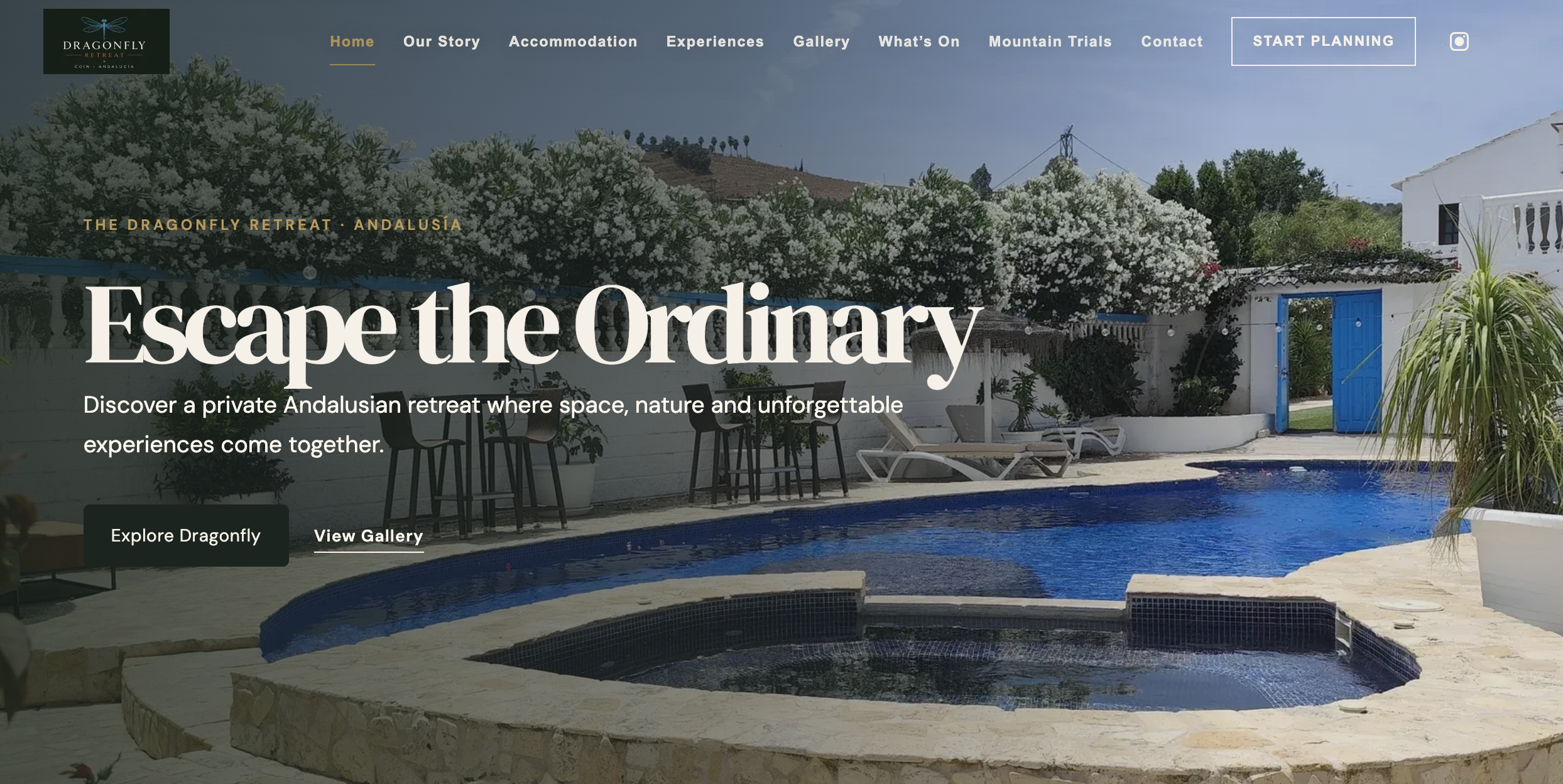
The venue provides private bedrooms across various room types, indoor and outdoor communal spaces, a pool and gardens where the whole group can gather. Beyond accommodation, it offers hosted experiences that give structure to a retreat without turning it into a checklist:
- Creative Arts – Paint the Landscape, for groups interested in a hands-on art-focused stay
- Cooking, Food, Wine & Mediterranean Living, for retreats led by food and wine themes
- Music, Vibes & Celebrations, for milestone celebrations and social gatherings
- Plan Your Own Group Experience, for organisers looking to create a fully bespoke itinerary
For families, friends, corporate teams or creative groups planning a retreat around a specific theme, the Cooking, Food, Wine & Mediterranean Living or Creative Arts – Paint the Landscape pages are good starting points, while groups who know they want an exclusive stay but not a fixed theme can plan a custom group experience built around their own brief. Check the accommodation layout to confirm room numbers suit your group size, then get in touch to discuss dates and a bespoke quote.
Sources
For driving rules and safety, see GOV.UK’s Spain travel advice and Spain’s official driving guidance. For regional planning, see the Andalucía tourism site and the Costa del Sol destination dossier. For structuring itineraries without over-programming, Aussie Loop’s planning guides offer a useful neutral framework.
FAQ
How many people can stay together in one Andalucia property?
This depends entirely on the property, so check bedroom numbers and layout with the venue directly rather than assuming a standard capacity. Venues built for exclusive group use, such as The Dragonfly Retreat near Coín, list room types on their accommodation page so organisers can match capacity to their headcount before inquiring.
Is it better to book one villa or split into separate hotels?
Staying together in one exclusive-use property keeps the group’s schedule, meals and social time centred in one place, which is usually easier to organise than coordinating separate hotel bookings. Splitting across hotels can work for very large groups with different budgets, but it tends to fragment shared meals and activities that make a group holiday feel cohesive.
Do UK driving licences work for hiring a car in Spain?
Yes, GOV.UK’s travel advice confirms that a UK photocard driving licence is valid for driving in Spain, though a provisional licence is not accepted. Anyone driving a hire car should also be added formally to the rental contract, since Spain’s official driving guidance notes this is required for additional drivers.
What is the best time of year for a group retreat in Andalucia?
Late spring and early autumn tend to offer warm, comfortable weather without the most intense summer heat, making them popular choices for pool-based group stays. Winter is milder than much of northern Europe and can suit smaller retreat groups focused on indoor workshops or countryside walks rather than swimming.
What activities work well for a mixed-age group holiday?
Activities that combine well for mixed ages include cooking or wine-tasting sessions, creative workshops and short visits to nearby villages, kept optional so guests can opt in or out freely. Basing these around a single countryside property, rather than travelling far each day, keeps the pace comfortable for both older guests and younger children.