
DRAGONFLY JOURNAL
10 Make Ahead Vegetarian Tapas for Home Cooks and Retreat Hosts
10 Make Ahead Vegetarian Tapas for Home Cooks and Retreat Hosts
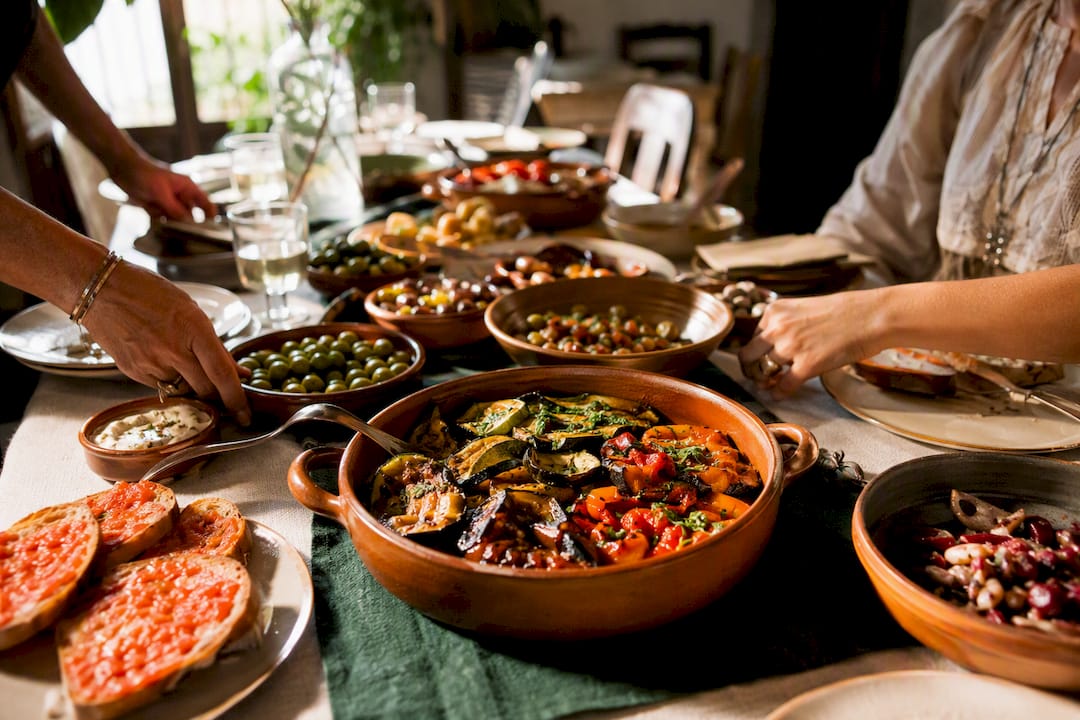
For a varied vegetarian tapas night, pick a mix of crispy patatas bravas, blistered pimientos de padrón, a Spanish tortilla, a creamy spread, something pickled or marinated, and a chilled soup like gazpacho. That spread of textures, hot and cold, fried and fresh, is what makes tapas work as a format. What follows are ten dishes worth cooking, how to build them into a proper menu, and how to serve them without spending the whole evening in the kitchen.
TL;DR:
- Most vegetarian tapas can be prepared in under 30 minutes, with many dishes like pimientos de padrón and gazpacho requiring minimal advance prep.
- Preparing some elements a day ahead, such as the tortilla, patatas bravas, and marinated olives, helps streamline serving during the event.
- Pairing with dry sherries, like fino or manzanilla, complements fried and vegetable-forward dishes, while light reds and crisp whites enhance other options.
- When hosting, arrange dishes by temperature and use vibrant, natural colors to make the spread visually appealing without extra styling.
- Swapping ingredients like dairy cheese and gluten-containing flours allows easy vegan and gluten-free adaptations, fitting various dietary needs.
Table of Contents
- Ten vegetarian and vegan tapas worth cooking
- Building a balanced tapas spread without the stress
- How a hosted tapas evening looks at The Dragonfly Retreat
- Regional variations of vegetarian tapas across Spain
- Pairing vegetarian tapas with Spanish wines and sherries
- Presenting and plating vegetarian tapas well
- Sourcing authentic Spanish ingredients
- Where to find the full recipes
- A hosted tapas night without the washing up
- Sources
- FAQ
Ten vegetarian and vegan tapas worth cooking
Good tapas hinge on contrast: something crunchy against something soft, something warm against something cold. These ten cover that ground and most take under half an hour.
- Pimientos de padrón. Blistered in hot olive oil and finished with flaky salt, these little green peppers need about five minutes in the pan and almost no prep beforehand. One in every dozen or so carries a real kick, which is half the fun. There’s nothing to make ahead here; they’re best cooked just before guests arrive, according to Spanish Sabores.
- Tortilla española. The classic Spanish potato omelette takes around half an hour with slow-cooked potatoes and onions bound in egg. It’s one of the little tapas that genuinely improves after resting, so make it a few hours ahead and serve it at room temperature rather than fresh from the pan, a point Spanish Sabores makes about both tortilla and bravas.
- Patatas bravas. Crisp roasted or fried potato chunks under a smoky, spiced tomato sauce, with a garlic alioli on the side if you want the full two-sauce version. Roast the potatoes up to a day ahead and reheat them hot before saucing; the sauce itself keeps well in the fridge for several days.
- Pan con tomate. Toasted crusty bread rubbed with garlic and ripe tomato, drizzled with good olive oil. It takes ten minutes and is genuinely one of the easiest vegetarian appetizers on this list, though it’s best assembled just before serving so the bread stays crisp.
- Cheese or almogrote-style spread. A rustic Canarian cheese and pepper spread, or a simpler alternative made from a firm cheese blended with roasted red pepper and paprika, spread over toasted bread. It can be made two or three days ahead and actually deepens in flavour with time.
- Marinated olives with citrus and fennel. Toss good olives with orange zest, fennel seeds, a bay leaf and olive oil. Five minutes of effort, but let them sit for at least a few hours, ideally overnight, so the flavours properly settle in.
- Papas arrugadas with mojo. Small “wrinkled” potatoes boiled in heavily salted water until the skins crinkle, served with a Canarian mojo sauce, either the red spicy version or a green herb one. Around 25 minutes total, and the mojo can be made a day in advance.
- Berenjenas con miel. Sliced aubergine, fried or roasted until soft, drizzled with a touch of honey and sometimes a scatter of sesame seeds. For a vegan version, swap the honey for agave syrup or date syrup, which gets you the same sticky contrast against the crisp aubergine.
- Champiñones al ajillo. Garlic mushrooms cooked hard and fast in olive oil with sherry, parsley and chilli flakes. This one genuinely belongs on any list of quick, under 30 minute tapas options; it takes about 15 minutes and tastes better made fresh rather than reheated.
- Vegetable or pea croquetas. Crumbed and fried croquettes filled with a thick béchamel studded with peas, spinach, or mushroom. They’re more work than anything else here, closer to an hour with chilling time, but you can shape and freeze them weeks ahead, then fry straight from frozen. For a lighter, faster alternative, finish the spread with a chilled gazpacho, which needs no cooking at all beyond a blender.
For gluten-free tapas, swap wheat flour for cornflour or a gluten-free blend in the croquetas, and check your bread choice for the pan con tomate. Vegan swaps run throughout: plant-based cheese in the spread, vegan mayonnaise in place of alioli, and a vegan béchamel using oat or soda milk in the croquetas, all changes that hosting notes on vegan tapas confirm work well without losing the dish’s character.
Building a balanced tapas spread without the stress
A good tapas table follows a simple rule: crispy, creamy, fresh or cold, and roasted or savoury. Hit all four and the spread feels complete, no matter how many dishes you’ve actually made.
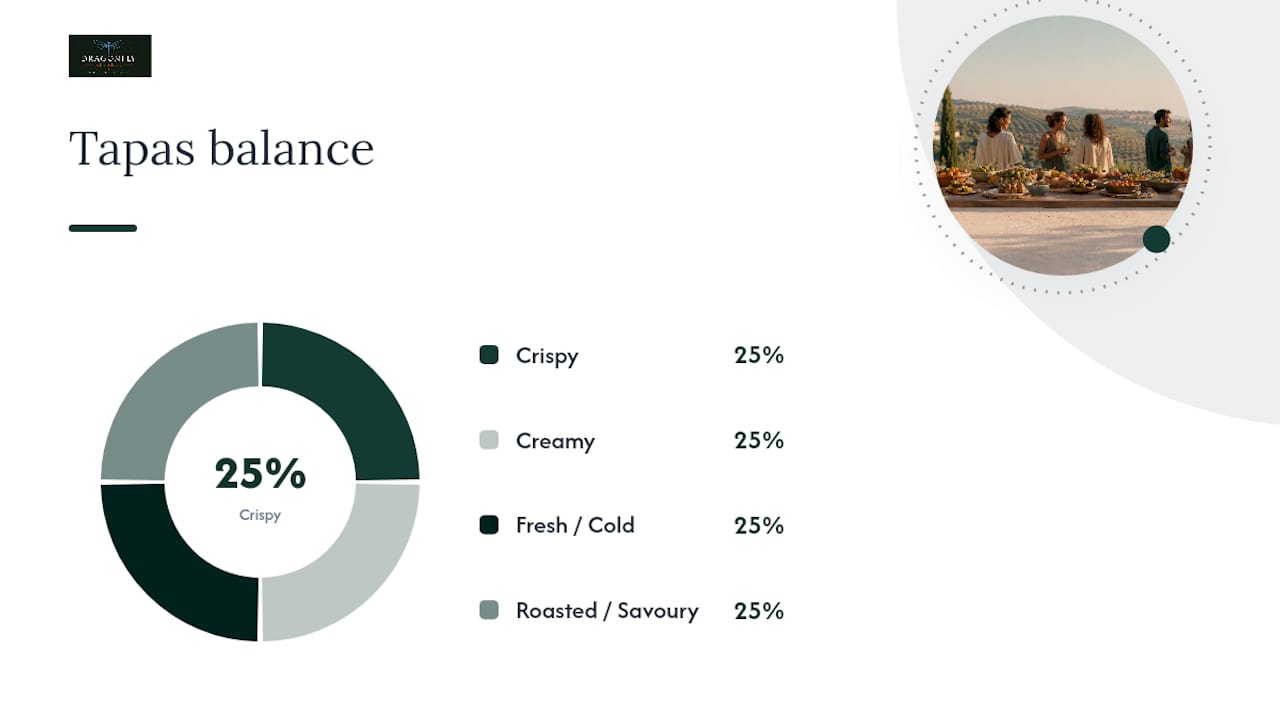
For four to six guests, three to five dishes plus bread and olives is plenty, something borne out by most vegetarian tapas roundups. A workable combination: patatas bravas (crispy), the cheese spread (creamy), marinated olives (fresh), and champiñones al ajillo (savoury). For eight to twelve guests, scale to five or six dishes and add a second starch, perhaps papas arrugadas alongside the bravas, plus a chilled soup to cool the palate between richer plates.
Timing matters more than the recipes themselves:
- The day before: make marinated olives, the cheese spread, and any mojo or bravas sauce.
- Several hours ahead: cook the tortilla and let it rest at room temperature; roast the potatoes.
- Within the hour: fry the padrón peppers, finish the mushrooms, plate everything.
As for portions, plan on two to three small tapas-sized servings per person per dish if you’re running five or more options, adjusting for how substantial your bread and potato dishes are.
Pro Tip: Roast your potatoes for the bravas and blister your peppers in the same oven session, one tray on each shelf, so you’re not running two separate cooking stages back to back on the night.
How a hosted tapas evening looks at The Dragonfly Retreat
Tapas suits group stays because it’s built around lingering at the table, what Spaniards call sobremesa, rather than a single formal sitting. At The Dragonfly Retreat, near Coín in the Andalusian hills above Málaga, food experiences lean into that shared, unhurried format: dishes that scale easily across a long table, simple stations rather than plated courses, and a paired tasting where wine sits alongside the food rather than after it.
Dietary flexibility is part of the appeal for mixed groups. Vegetarian and vegan guests are catered for as part of the same menu rather than a separate afterthought, which matters when you’re feeding a group with different needs across several days. Full details sit within the Cooking, Food, Wine & Mediterranean Living collection for anyone weighing a hosted route over cooking for a crowd themselves.
Regional variations of vegetarian tapas across Spain
Tapas culture shifts noticeably as you move around the country, and vegetarian options shift with it. In Andalucía, where olives and fried vegetables dominate, you’ll find berenjenas con miel and pan con tomate served everywhere from beach bars to city centre terraces. Padrón peppers, technically from Galicia, have travelled south so thoroughly that most Andalusian tapas bars now treat them as their own.
Catalonia brings a different palette. Dishes like chickpeas and spinach, known locally as cigrons amb espinacs, use smoked paprika, pine nuts and raisins, and can be on the table in around 15 minutes according to The Spanish Radish. Catalonia is also home to pa amb tomàquet, the tomato bread that Andalucía’s pan con tomate borrows heavily from.
The Canary Islands contribute two staples that have spread nationwide: papas arrugadas with mojo, and cheese spreads like almogrote. Both travel well and reheat easily, which is part of why they’ve become tapas bar standards far from their island origins.
None of this means a vegetarian tapas menu has to be geographically pure to work. What matters more, according to food writers tracing the social history of tapas, is the mix of textures and the relaxed pace of eating, not strict regional accuracy. Borrowing a Catalan dish alongside an Andalusian one on the same table is entirely in keeping with how tapas actually developed.
Pairing vegetarian tapas with Spanish wines and sherries
Sherry is the traditional match for tapas, and it earns that reputation with vegetable-forward dishes. A chilled fino or manzanilla, both bone dry and slightly salty, cuts through fried food like croquetas or patatas bravas without overwhelming them. That same dryness works well against olives and pan con tomate, where a sweeter wine would clash with the acidity of the tomato.
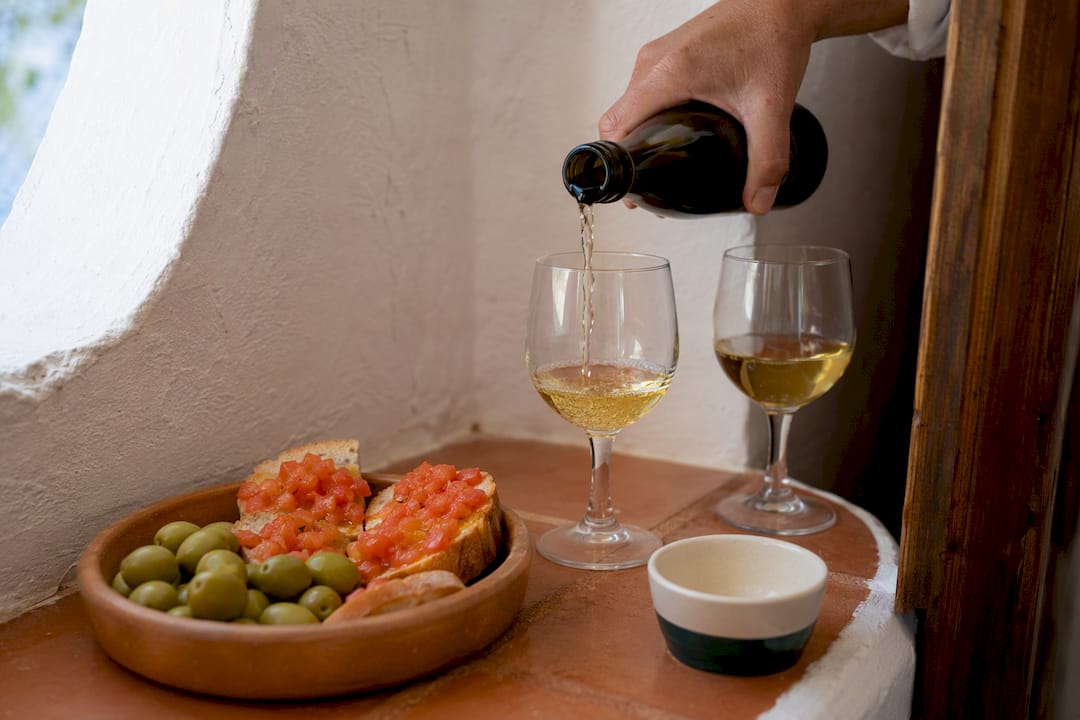
For richer dishes such as the cheese spread or berenjenas con miel, an amontillado sherry, nuttier and slightly oxidised, holds up better than fino and complements the caramelised sweetness of the honey or agave. Albariño, a crisp white from Galicia, is a reliable all-rounder across most of this list, particularly with the tortilla and gazpacho, where its citrus notes echo what’s already in the dish.
If you’re serving red, keep it light. A young Rioja or a Garnacha works with heartier plates like the mushrooms or croquetas, but heavier, oak-aged reds tend to fight with the vinegar and citrus that run through so much of this cuisine. Cava, Spain’s sparkling wine, is worth having open throughout; its acidity resets the palate between richer and fresher dishes, which matters more with a mixed vegetarian spread than with a single main course.
Presenting and plating vegetarian tapas well
Tapas are meant to be shared, so plating should support that rather than fight it. Use small, shallow dishes rather than deep bowls, which let guests see and reach each item without digging. Group by temperature rather than by course; put the hot dishes, bravas, mushrooms, padrón peppers, close together so they stay warm longer, and keep the cold items, olives, gazpacho, the spread, on a separate part of the table.
Colour does a lot of the work for you. The natural palette here, red pepper, green herbs, golden potato, deep purple aubergine, needs little styling beyond a scatter of fresh parsley or a final drizzle of olive oil just before serving. A good quality extra virgin olive oil and proper smoked paprika are worth the small extra cost, since both lift a simple dish visibly and by taste, something BBC Good Food notes about finishing touches on otherwise plain ingredients.
For groups, consider setting up a pa amb tomàquet station, bread, halved tomatoes, garlic and oil laid out for guests to build their own. It turns one dish into a small activity and gives people something to do with their hands before the rest of the food arrives, an idea backed by hosting guidance on vegan tapas. Serve everything at room temperature where the dish allows it; tapas rarely need to be piping hot, and food that’s sat out for twenty minutes still tastes right.
Sourcing authentic Spanish ingredients
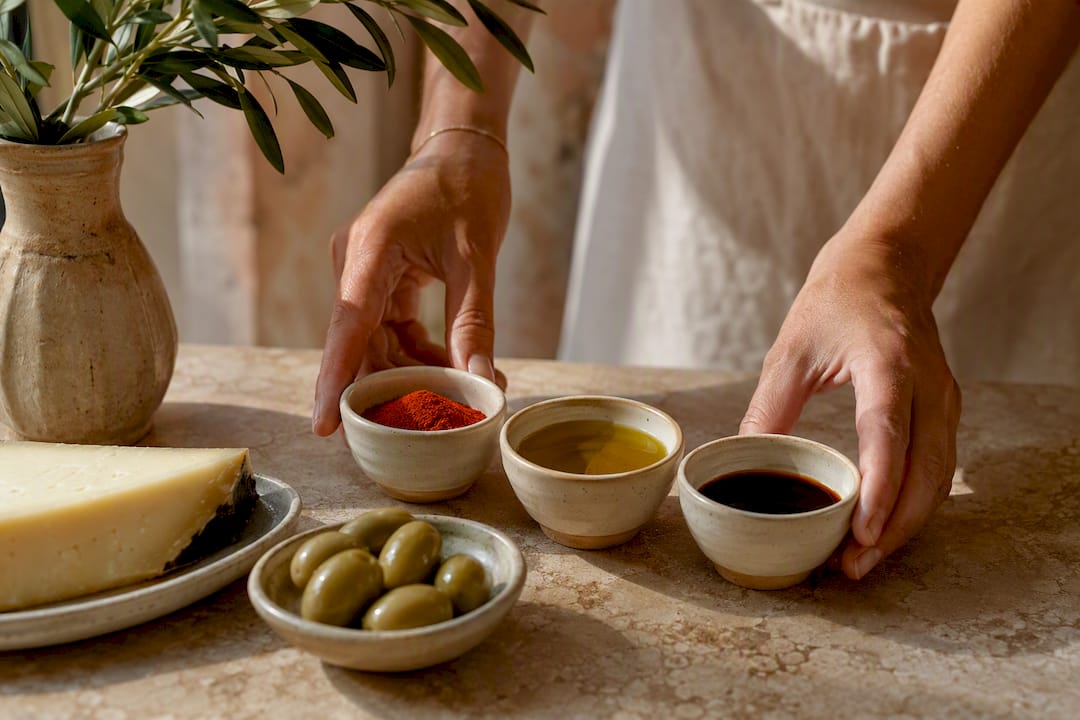
Look for Spanish-labelled smoked paprika (pimentón de la Vera), Spanish extra virgin olive oil, and sherry vinegar at larger supermarkets or specialist delis; all three do more for authenticity than any technique. Manchego and other Spanish cheeses are increasingly common outside dedicated shops, and dry sherry for both cooking and drinking is worth buying from a wine merchant rather than a supermarket own-brand where the flavour tends to be flatter.
Where to find the full recipes
Full instructions for the dishes above sit across a few sources: Spanish Sabores covers the classic staples with regional notes, The Spanish Radish has quick, party-ready versions, and BBC Good Food runs a broader vegan and vegetarian selection. For fast weeknight versions of similar small plates, Adulting With Food is worth a look too.
A hosted tapas night without the washing up
If cooking a full spread yourself sounds like more effort than the evening’s worth, there’s a simpler route. The Dragonfly Retreat’s Cooking, Food, Wine & Mediterranean Living collection builds tapas-style dining and wine tasting into a hosted evening at the retreat near Coín, so your group gets the shared plates and long table conversation without anyone standing over a stove.

This format suits retreats, celebrations, and multi-night group stays particularly well, as the food experience can be integrated into the overall stay rather than being a standalone dinner booking. Guests with different dietary needs, vegetarian, vegan or otherwise, can be included in a shared menu rather than served separately, which is important when catering for a group over several days rather than a single meal. If you’re planning a longer stay around it, the accommodation pages show the private rooms and shared spaces available for exclusive-use group bookings. To check dates and talk through what a hosted evening could look like for your group, get in touch through the Dragonfly Retreat site.
Sources
- 11 delicious vegetarian options in Spain
- 10 vegetarian tapas recipes that disappear first at every party
- Vegan tapas and hosting notes
FAQ
Which tapas are vegetarian?
Classic vegetarian tapas include patatas bravas, tortilla española, pimientos de padrón, pan con tomate, marinated olives, and gazpacho. Most traditional Spanish tapas menus already lean vegetable-forward, since fried potatoes, peppers, mushrooms and bread-based dishes were tapas bar staples long before “vegetarian” became a menu category of its own.
What are some easy vegetarian tapas recipes?
Pan con tomate, marinated olives, and pimientos de padrón are among the easiest, each taking 10 minutes or less of active preparation. Gazpacho is another good option since it needs no cooking at all, just a blender and a few hours in the fridge to chill properly.
What are ten easy tapas dishes I can make at home?
A solid ten-dish spread covers pimientos de padrón, tortilla española, patatas bravas, pan con tomate, a cheese or almogrote-style spread, marinated olives, papas arrugadas with mojo, berenjenas con miel, champiñones al ajillo, and vegetable croquetas, with gazpacho as an optional eleventh for something cold. Most take under 30 minutes, and several, like the tortilla and the olives, actually taste better made a day ahead.
What are the top five tapas dishes?
By popularity and ease, patatas bravas, tortilla española, pimientos de padrón, pan con tomate, and gazpacho form a strong core five. They cover all four texture categories, crispy, creamy, roasted, and fresh, that make a tapas spread feel complete even with a short guest list.
Can vegetarian tapas be made vegan or gluten-free?
Yes, most vegetarian tapas adapt easily; swap dairy cheese for a plant-based version in spreads, use vegan béchamel in croquettes, and choose a gluten-free flour blend for anything fried in batter. These substitutions are common practice in Spanish restaurants and rarely change the character of the dish, according to hosting guidance on vegan tapas.