
DRAGONFLY JOURNAL
Yoga Retreat Planning in Málaga and Andalucía: A Practical Guide
Yoga Retreat Planning in Málaga and Andalucía: A Practical Guide

Planning a yoga retreat in southern Spain comes down to five decisions, made in this order: who the retreat is for, which venue suits that group, how the days will flow, what it will cost, and what you need to confirm in writing before you commit. Get those right and the rest is detail. This guide takes you through each one for retreat leaders considering Málaga or the wider Andalucía region, with a sample daily schedule, a timeline and a pre-booking checklist.
TL;DR
- Define your guests and format first, then shortlist venues. Choosing a venue because it photographs well is the commonest early mistake.
- An exclusive-use countryside venue lets your group practise, eat and rest together without sharing space with strangers or a conference crowd.
- Build each day around one or two anchor sessions, with real free time and a long midday break.
- Settle transport, bedroom sharing, dietary needs, insurance and payment terms before you open bookings.
- Start 9 to 12 months out for a destination retreat, and announce to guests four to six months ahead.
Table of Contents
- Start with the retreat, not the venue
- A realistic planning timeline
- Choosing the right venue
- Group size and bedroom arrangements
- Catering that supports the day
- Designing the daily schedule
- Excursions and optional activities
- Transport and arrival
- Budget, pricing and booking terms
- Insurance, contracts and guest information
- What to check before you book a venue
- Hosting your retreat at The Dragonfly
- FAQ
- Sources
Start with the retreat, not the venue
Before you look at a single villa or finca, write down who the retreat is for, what level of practice it assumes, how long it runs and what guests will pay. Gather’s host guide makes the same point: define the audience, offer and format first, then build a budget around realistic paid attendance and break-even, and only then choose a venue on its practical and contractual merits.
A few questions shape everything that follows:
- Where are your guests coming from? If most fly from the UK, you want a venue within reasonable reach of Málaga airport and a retreat length that justifies the journey.
- Will they share? Some guests are happy to share a room or a bathroom, others will only book a single room. That affects both venue choice and price.
- What is the practice? A gentle morning flow with long afternoons is a very different venue brief from an intensive teacher-training week.
- Is the group adults only? Many yoga retreats are, which is worth stating clearly when you market it.
A tool that helps at this stage is a shared planning space where your co-teachers or a friend-and-family group can vote on dates and see the itinerary in one place. Group trip planning tools with date polling and shared itineraries can save a lot of email chasing, particularly if you are co-hosting.
A realistic planning timeline
There is no official standard, but retreat leaders tend to work to a similar rhythm. One widely shared timeline for destination retreats suggests defining your concept and shortlisting venues around 9 to 12 months out, signing the venue and opening early-bird booking at 6 to 9 months, and running your main marketing push at 3 to 6 months. In the final one to three months you collect final payments, dietary and health forms and the detailed schedule.

On promotion, one practical guide suggests announcing four to six months before the start and opening bookings straight away, because guests flying in need time to arrange leave and flights, and early deposits give you the confidence to commit to the venue.
In practice, for a Málaga retreat that means:
- 9 to 12 months out: settle your concept and guest profile, make enquiries with venues, ask for quotes and hold provisional dates.
- 6 to 9 months out: sign the venue agreement, finalise budget and pricing, open early-bird places.
- 3 to 6 months out: market the retreat, confirm catering and local excursions, line up any assistant or co-teacher.
- 1 to 3 months out: collect balances, health and dietary forms, and send the detailed schedule.
- Final month: confirm headcount, send packing list and arrival information, brief your team.
If you want a fuller task-by-task list, our retreat planning checklist covers the journey from first idea to the final day.
Choosing the right venue
Yoga Alliance Professionals advises looking for an accessible, serene and inspiring location with suitable yoga spaces, comfortable accommodation and good amenities. That is a sound start, but a few details separate a workable venue from a stressful one.
Practice spaces
Ask to see the actual spaces where you will teach, and ask what else happens in them. Insight Timer’s venue guide suggests checking flooring suitable for yoga mats, temperature control and soundproofing. A teacher who has hosted in a UK hall will know the usual traps: noise from neighbouring rooms, competing bookings and poor ventilation. Echo Yoga lists these alongside car parking and access for students with mobility difficulties.
In southern Spain, think about the season too. Check how the indoor space copes with heat in summer and with cooler mornings in winter, and whether there is shade for outdoor practice. An outdoor terrace or garden is lovely for a sunrise or sunset session, but you will want a good indoor alternative when the weather does not cooperate.
One rule of thumb for space is around 2 square metres per person, with 60 to 90 cm between mats and extra room for props. Measure your likely group against the room, not against the brochure.
See it before you sign
If you cannot visit in person, Insight Timer suggests asking for a live virtual tour and extra photographs and video. Use the same checklist either way: cleanliness, maintenance, acoustics, natural light, room comfort and ambiance. Ask the venue to walk you through the space at the time of day you plan to teach.
Why exclusive use matters
When a retreat shares a property with other guests, you lose control of noise, meal times and the feel of the place. With exclusive use, the whole property is yours for the stay. Your group can practise at dawn without worrying about anyone else’s schedule, eat together when it suits your day, and spend free time by the pool or in the garden knowing that it is only your people there. It also makes quiet time easier to protect, which is half of what guests are paying for.
If you are comparing options, our guides to choosing a group retreat venue in Málaga and why exclusive stays can beat apartments go into the trade-offs.
Group size and bedroom arrangements
Start from the number of paying guests you can realistically fill, then work out how many rooms and beds you need. Your break-even figure depends on this, so do not size the retreat on the maximum the venue can sleep.
Things to settle with the venue in writing:
- How many private bedrooms there are, and whether any are shared by design.
- Which rooms have private bathrooms and which share.
- Where you and any assistant will sleep, and whether your room is included in the headcount.
- Whether rooms of different styles are priced differently, which lets you offer a range of price points.
At The Dragonfly Retreat near Coín, accommodation is made up of individual rooms and suites, including the Pearl Suite, Wisdom Room, Starburst Cottage and Starlight Rooms, which you can see on our accommodation page. Because each space differs, retreat leaders can think about who sleeps where, rather than being handed identical hotel rooms. We host adults and young people aged 14 and over.
Catering that supports the day
Food shapes a retreat as much as the practice does. Decide early whether meals are all included, whether you want a vegetarian or plant-based menu throughout, and how you will handle allergies and intolerances. Collect dietary information well before arrival, not on the first evening.
Guests also tend to remember shared meals. Long lunches on a terrace and an evening meal at one table give a group time to talk without anyone checking a phone. At The Dragonfly we offer Mediterranean food and can plan meals around the group, including paella evenings and wine tasting as optional extras. If you are curious how a hosted kitchen can work for a retreat, our piece on planning a Málaga retreat with a private chef explains the starting points.
Questions to ask any venue about catering:
- Who cooks, and can they work with your dietary requirements?
- Are mealtimes flexible enough to match your sessions?
- Is there tea, fruit and water available between meals?
- What happens on the arrival and departure days?
Designing the daily schedule
Yoga Alliance Professionals recommends a balanced day with yoga sessions, workshops, free time, meals and optional activities, which might include meditation, hiking or local cultural experiences. The common error is overfilling it. Gather suggests building the schedule around a small number of anchor sessions with buffers, and that is good advice for a group arriving tired from travel.
Here is a sample day, offered as a starting point to adapt to your own style and the season:
| Time | Activity | Notes |
|---|---|---|
| 07:30 | Gentle morning practice | Outdoors if the weather suits, indoors if not |
| 09:00 | Breakfast together | Leave room to linger |
| 10:30 | Optional walk, workshop or free time | Guests choose |
| 13:30 | Long lunch | The main meal of the day in Spain |
| 14:30 to 16:30 | Rest, pool, reading, treatments | Keep this protected |
| 17:00 | Afternoon session | Slower practice, breathwork or meditation |
| 19:00 | Free time | Sunset on the terrace |
| 20:30 | Evening meal together | Sharing, not performing |
A few principles hold for most retreats. Put the most energetic practice in the morning, give the middle of the day to rest, and leave the evening for connection. Do not schedule every hour: guests need unplanned time to process the experience. And tell people up front that plans can shift. Weather, travel delays and group energy all change a day, so a relaxed, open approach to communicating changes works better than rigid promises.
Rest time
In the Andalusian summer, the afternoon is naturally a time to stay out of the sun. Plan the midday break around that rather than against it. In cooler months, the same break still gives guests time to nap, read or walk quietly. Make it clear in your welcome information that rest is part of the programme, not an absence of one.
Day one and the final day
The first evening should be light: a welcome, a short gentle practice if the group wants one, and supper. On the last morning, leave time for a closing circle and breakfast before transfers. Check the flight times of departing guests when you set the closing session.
Excursions and optional activities
Andalucía gives you plenty of choice beyond the mat: white villages, markets, coastline, walking and food experiences. Keep excursions optional and short enough that they do not eat into rest time. One half-day trip in a week-long retreat is usually plenty. Check what each outing requires in terms of walking distance, footwear and transport, and make sure guests with reduced mobility have an alternative.
At The Dragonfly we can arrange personalised experiences, including nature activities, art, photography and excursions around Andalucía, so your retreat can include something beyond practice without you having to organise every detail. Our Plan Your Own Group Experience page explains how bespoke groups can shape their stay.
If you are after sunrise or sunset practice outdoors, ask the venue about terraces and garden areas that face the right way, and what shade or cover exists for the hottest weeks.
Transport and arrival
Most UK guests will fly to Málaga airport, so ask any venue how long the transfer takes and how guests should make the journey. Olivier Consultancy suggests checking distance from the nearest airport or station and support for mobility needs; in practice, that means getting door-to-door timings from the venue itself, not from a map.
Options include a single group transfer, shared taxis or hire cars. If your group arrives on several flights, a minibus pick-up at a set time saves confusion; minibus and coach hire for groups is worth researching, including accessible vehicles. Also check parking at the venue if guests will drive, and tell everyone the address, the nearest town and a contact number a week before arrival.
If you are staying in the countryside, consider whether guests will need a vehicle to reach shops or the coast. Many retreats are intentionally set up so they do not, and that is part of the appeal of a self-contained property.
Budget, pricing and booking terms
Yoga Alliance Professionals lists the costs to include: accommodation, activities, meals, transport, staff and instructor fees, insurance, marketing and miscellaneous expenses. Price to cover costs and give value, and decide whether to offer early-bird or group rates. Build in a contingency, since a retreat with a tight margin leaves you exposed if a single guest drops out.
Write your payment terms down before you open bookings: deposit, instalment dates, final payment deadline and cancellation policy. Your retreat page should state what is included and what is not, the full price per person, deposit and cancellation terms, as well as who the retreat is for and who it is not for.
At The Dragonfly, group stays are quoted according to group size, dates and chosen activities, so ask for a quote against your headcount and dates rather than working from a general figure.
Insurance, contracts and guest information
If you sell to UK consumers, consumer law applies: your marketing and your terms must match what you actually deliver. If you advertise daily practice with an experienced teacher, that is what guests should get. The same source recommends risk assessments for activities and spaces, checking facilitators’ qualifications and insurance, and a written venue agreement covering responsibilities, access times, damage and cancellation.
On waivers, the position in the UK is that you generally cannot exclude liability for death or personal injury caused by negligence, so a waiver is not a shield; it can still help by showing guests were informed and by setting expectations.
Check your own insurance carefully. Residential retreats bring extra risks over a regular class, including accommodation arrangements, supplier failure and extended group activity, so ask your insurer whether your policy covers a multi-day retreat abroad, and whether event cancellation cover makes sense.
Finally, guest information. You will be collecting dietary needs, allergies, injuries, health conditions and emergency contacts, and some of this is special category data under UK GDPR. Have a clear privacy policy that says what you collect, why, how long you keep it and who sees it. Speak to a solicitor or the Information Commissioner’s Office guidance if you are unsure of your obligations.

What to check before you book a venue
Use this as a final list before signing:
- Exclusive use confirmed in writing, with exact dates, check-in and check-out times.
- Number of beds, room types, bathrooms and who shares with whom.
- Photos or a live tour of the indoor and outdoor practice spaces, including flooring, shade and noise.
- Heating, cooling and ventilation in practice areas.
- Catering: who cooks, dietary handling, mealtimes and what is included.
- Transfer time from Málaga airport and parking on site.
- Access for guests with mobility needs.
- Deposit, payment schedule, cancellation and any damage terms.
- Local rules or taxes that may apply, and who is responsible for them.
- What you may bring in: sound equipment, extra teachers or outside suppliers.
- A named contact at the venue for the week itself.
The broader question of arrangements specific to Spain is worth raising directly with any venue: whether there are local tourism registration requirements, what the venue provides for guests’ safety and emergency access, and what to do about medical help for a group in the countryside. Ask these in writing so that the answers are on record.
Hosting your retreat at The Dragonfly
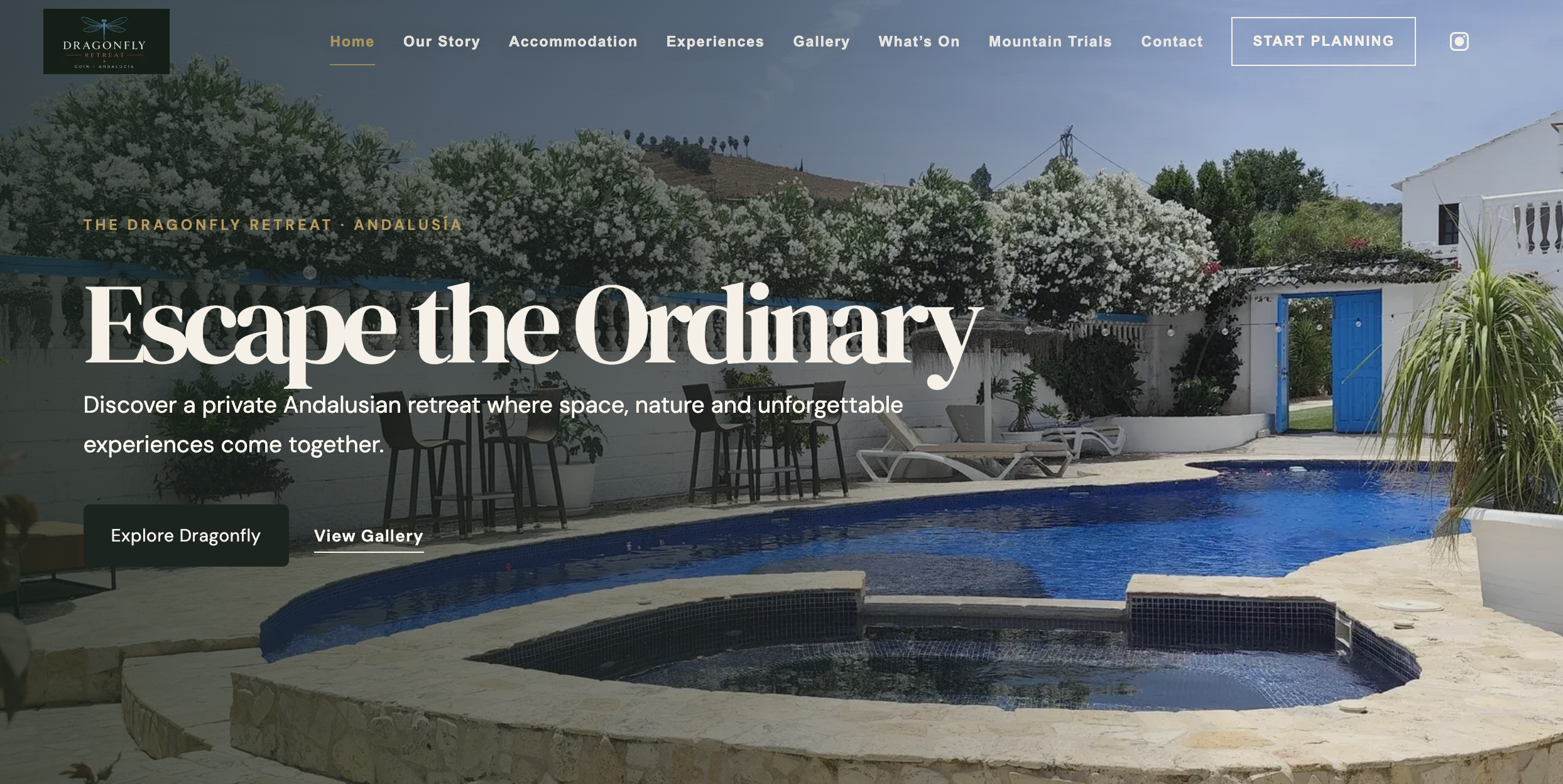
The Dragonfly Retreat is a private, independently created venue in the Andalusian countryside near Coín, Málaga. It is not a conventional hotel or resort. A group has the gardens, swimming pool, terraces and indoor and outdoor communal spaces to itself, so you can practise, eat and relax together in one place, with private bedrooms for everyone. We can plan meals, excursions and extra experiences around your retreat.
If you are considering a yoga or wellbeing retreat, you can see our spaces and rooms, browse life at the Dragonfly, or start a conversation about your group and tell us the dates and numbers you have in mind.
FAQ
How far ahead should I plan a yoga retreat in Spain?
For a destination retreat, 9 to 12 months is comfortable for choosing the concept and venue, and four to six months before the start is a sensible time to announce and open bookings. Popular dates book up, so earlier is easier if you have a fixed time of year in mind.
How many people should a yoga retreat have?
Choose the number you can realistically fill and teach well, then check it against the venue’s beds and practice-room size. A smaller group is easier to host and creates a closer atmosphere, but your costs and break-even point should decide the minimum.
What should a yoga retreat schedule include?
One or two anchor practice sessions, meals together, a long midday rest, optional activities and free time. Avoid filling every hour, and tell guests that plans may adapt to weather and group energy.
Do I need insurance to lead a retreat abroad?
There is no statutory requirement for yoga teachers to hold insurance in the UK, but venues commonly expect it, and membership bodies may require it. Residential retreats carry extra risks, so ask your insurer to confirm that your policy covers a multi-day retreat in Spain.
Sources
- How to Organise a Yoga Retreat: Host Guide (Gather)
- Step-by-Step Guide to Hosting an Unforgettable Yoga Retreat (Yoga Alliance Professionals)
- 8 Tips to Choose the Perfect Yoga Retreat Venue (Insight Timer)
- 5 points to consider when choosing a venue for your yoga class (Echo Yoga)
- How to Choose Your Ideal Yoga Studio Space
- How Do You Fill a Yoga or Wellness Retreat in 2026?
- Running A Retreat Business? (Sprintlaw UK)
- Plan Friends and Family Retreats with 3 Tools
- Confirm These 3 Coach Amenities Before Booking for UK Group Planners